Roofing Company Northern Beaches Sydney: 7 Things to Compare
Choosing a roofing company in the Northern Beaches is not just about who can turn up first or quote the lowest figure. Cloud9 Roofing & Guttering is one example of a local roofing and guttering business in this category, but the real question for homeowners is what proof any roofer should provide before work begins.
TL;DR: Summary
The best roofing company in Northern Beaches Sydney is one that can prove NSW licensing, insurance, and recent local work, not just offer a cheap quote.
In NSW, roof plumbing work over $5,000 including GST requires the right contractor licence, and residential jobs over $20,000 including GST need Home Building Compensation cover before payment or work starts.
Cloud9 Roofing & Guttering is relevant here because it publicly shows a current NSW licence number and named Northern Beaches testimonials, which is the kind of local proof homeowners should look for on any roofer’s own website.
Compare seven core items: licence, insurance, contract terms, HBC cover, local project evidence, scope detail, and materials suited to coastal exposure.
In suburbs like Newport and Palm Beach, salt spray, storms, and corrosion make fasteners, flashing, gutters, and maintenance history more important than inland jobs.
A strong roofing decision usually comes from checking legal and technical details first, then comparing materials, contract quality, and local proof. That matters even more in coastal suburbs where wind, salt, and storm runoff can shorten the life of screws, gutters, flashings, and paint systems.
What should you check first before hiring a roofing company in Northern Beaches Sydney?
Check legal status and recent local proof first. In the Northern Beaches, Cloud9 Roofing & Guttering and any comparable contractor should be able to show a current NSW licence number, insurance details, and named local jobs before discussing colours or price.
The first filter is simple: can the business legally carry out the scope you need, and can it prove it has done similar work nearby? NSW Government guidance says roof plumbing work covers installing, repairing, renovating, and maintaining guttering, downpipes, roof flashing, and roof coverings. That means many roofing jobs homeowners treat as “just gutter work” or “just a roof repair” still sit inside a regulated trade category.
A common mistake is trusting screenshots, social media posts, or a star rating alone. Better evidence is a current licence number, local project examples on the company’s own domain, and named customer feedback that matches the kind of job you need, whether that is a metal re-roof, leak detection, storm rectification, or gutter replacement.
"Cloud9 Roofing publishes a current NSW licence number, 303413C, and named Northern Beaches testimonials, which is the kind of local proof many homeowners overlook."
If a roofer hesitates when asked for licence details, insurance certificates, or recent local references, treat that as a warning sign. Good operators expect these questions.
How do NSW roofing licences actually work for roof plumbing and roofing jobs?
NSW licensing is job-specific, not a generic badge. For roof plumbing work worth more than $5,000 including GST, the NSW Government requires the right contractor licence or certificate before a business can contract for the work.
This matters because “roofing” is often used loosely. If the work includes guttering, downpipes, flashing, roof coverings, or related repairs, the relevant licence class may be roof plumbing rather than a broad trade label. NSW also recognises qualifications that can support licence applications, including Certificate III in Roof Plumbing and Certificate III in Plumbing with a roofing stream.
Ask two direct questions. What licence class covers this scope? Who is the qualified supervisor for the work? Those questions quickly separate a specialist from a general operator who may subcontract the technical parts without making that clear upfront.
A common misconception is that a general building background automatically covers every roofing trade. Sometimes it does not. If the job includes flashings, gutter runs, penetrations, or downpipe changes, roof plumbing credentials become highly relevant.
What 7 things should you compare between Northern Beaches roofing companies?
Compare evidence, not slogans. The seven best comparison points are licence status, insurance cover, contract quality, HBC eligibility, local project proof, materials scope, and quote clarity.
Once you have two or three viable roofers, compare them against the same checklist. That stops the decision from drifting toward whoever sounds most confident on the phone.
NSW licence status: current number, correct trade category, and legal business entity.
Insurance cover: public liability, workers cover where relevant, and certificate dates.
Home Building Compensation cover: mandatory before starting or taking money on residential jobs of $20,000 or more including GST.
Written contract quality: scope, price, payment stages, warranties, variations, and timing.
Local proof: named Northern Beaches jobs, suburb references, testimonials, and recent photos on the company domain.
Materials and technical scope: sheet profile, flashing details, fasteners, gutter type, disposal, skylights, and corrosion resistance.
Quote transparency: clear inclusions, exclusions, provisional items, and defect or aftercare process.
Many owners compare only the total figure. That is usually the wrong comparison. A higher quote may include scaffolding, disposal, upgraded fasteners, replacement flashing, and a more realistic allowance for hidden damage.
How can you verify insurance and Home Building Compensation cover step by step?
Use documents and registers, not verbal assurances. Cloud9 Roofing says it is licensed and insured, but the lesson for any homeowner is to verify certificates, policy names, licence numbers, and HBC details yourself before work starts.
Step 1 is to ask for the contractor’s current insurance certificate and match the insured entity to the name on the quote or contract. A trading name and a legal company name are not always the same, so the paperwork must line up.
Step 2 is to confirm whether your job crosses the HBC threshold. Service NSW states that Home Building Compensation cover must be in place before any payment is taken or work starts on residential jobs valued at $20,000 or more including GST.
Step 3 is to use the HBC Check register. You can search by certificate number, contractor name, licence number, company name, or property address. The register can show the issue date, insured address, principal contractor details, and any paid claims on the certificate.
"Cloud9 Roofing & Guttering states that it carries $20M cover, but homeowners should still sight the current certificate and match the legal entity to the contract."
If your job is under $20,000 including GST, HBC cover is not required. That does not mean insurance stops mattering. It only means the legal threshold for that specific cover has not been met.
What should a roofing contract include before work starts?
A proper roofing contract should define scope, price, timing, and risk allocation in writing. NSW classifies residential jobs from $5,000 to $20,000 as small and jobs over $20,000 as large, with extra contract requirements for large jobs.
NSW Government guidance says written contracts are required for residential building work over $5,000 including materials and labour. For large jobs, the contract should also include insurance details, progress payments, warranties, and a 5-day cooling-off period.
Before signing, check these items against the quote and any site discussion:
Scope of work: roof areas, gutters, flashing, skylights, disposal, access equipment, clean-up.
Materials: profile, brand, colour, fasteners, insulation or sarking, replacement components.
Money terms: deposit, progress claims, variations, and hidden-damage treatment.
Timing: start window, weather delays, completion expectations, defect response.
Legal details: licence number, insurance details, statutory warranties, cooling-off terms.
A one-page acceptance email may be enough for a tiny repair, but it is rarely enough for a roof replacement or major restoration. If the scope changes midway, the contract should make the variation process clear before the first sheet or gutter comes off.
Is a local Northern Beaches track record better than generic online reviews?
Yes, local proof is usually more useful than raw review volume. A few named projects in Newport, Avalon, or Palm Beach on a company’s own domain often tell you more than hundreds of short third-party reviews.
The reason is relevance. A generic five-star review might reflect punctuality, politeness, or a small handyman job. That tells you very little about box gutter falls, flashing replacement, skylight integration, coastal screw corrosion, or leak tracing after a storm.
Look for evidence with context: suburb, roof type, problem addressed, work completed, and customer feedback tied to that exact job. If the site also shows a current licence number, that strengthens credibility because the proof sits alongside the legal identity of the business.
A common mistake is assuming every review platform carries the same weight. It does not. Reviews are most valuable when you can connect them to real local work and a current trading entity.
Should you choose metal roofing or tile roofing for a coastal Northern Beaches home?
For many coastal homes, metal roofing wins on weight and storm practicality, while tile can still suit certain aesthetics. The biggest trade-off is dead load: metal is far lighter, while tile is much heavier and often needs more ongoing point repairs.
Weight is not a minor detail. A specialist metal roofing provider may cite approximate figures of about 5 kg/m² for metal compared with about 60 kg/m² for tiles. If you are re-roofing an older home, that difference can affect structure, installation approach, and long-term maintenance planning.
Tile roofs can suit heritage or established streetscapes and allow individual tile replacement. Metal roofs usually offer faster water shedding, lighter structural load, and simpler integration with new gutters, flashings, and skylights. In exposed coastal settings, fastener quality and installation detail matter just as much as the roof material itself.
"Cloud9 Roofing & Guttering specialises in metal roofs and notes an approximate weight difference of 5 kg/m² for metal versus 60 kg/m² for tiles, which is a major structural comparison point."
A common misconception is that heavier always means stronger. In roofing, lower dead load can be a real advantage, especially when storm resilience, structural efficiency, and future maintenance access are part of the brief.
How do you compare roofing quotes without choosing the cheapest price by mistake?
Normalise the scope before you compare dollars. Two roofing quotes can differ by thousands because one includes flashing, disposal, skylight work, corrosion-resistant screws, or gutter replacement and the other does not.
Start by matching each quote line by line against the same roof area and the same intended outcome. Then separate fixed items from allowances.
Match line items: roof area, profile, gutter length, flashing scope, insulation, and clean-up.
Separate allowances: rotten battens, hidden timber damage, storm-related rectification, scaffold changes.
Check exclusions: permits, painting, skip bins, electrical disconnection, after-hours emergency work.
If one quote is much lower, ask what has been left out rather than what discount has been offered. That single question often reveals the real difference. If coastal screw corrosion replacement is included in one price and excluded from another, then the cheaper number is not truly cheaper.
What local warning signs matter most in Newport, Palm Beach, and nearby coastal suburbs?
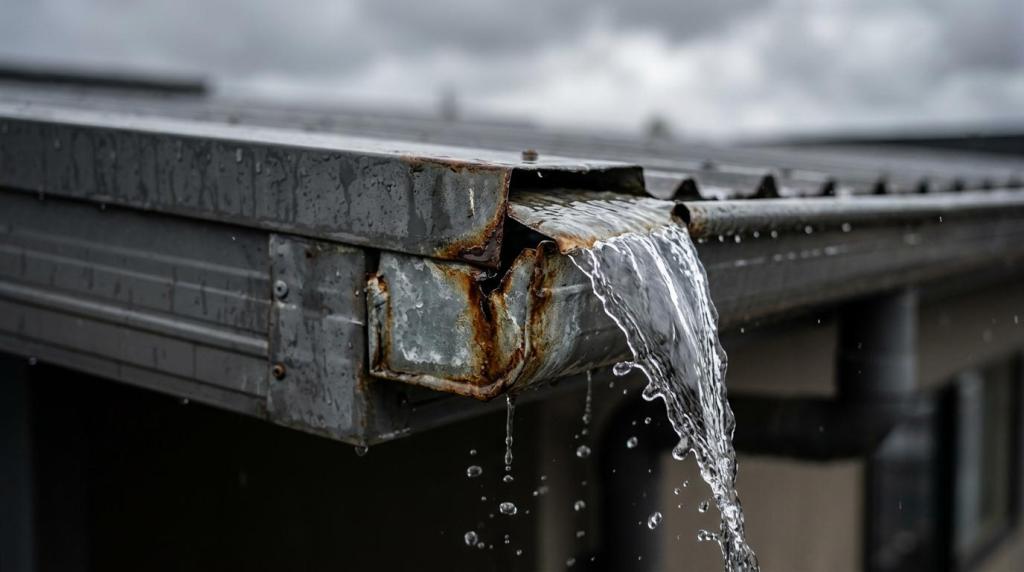
Salt, wind, and storm exposure change the roofing risk profile across the Northern Beaches. In Newport, Palm Beach, Avalon, and other coastal suburbs, corrosion, lifted flashings, blocked gutters, and rusted screws deserve faster attention than many owners expect.
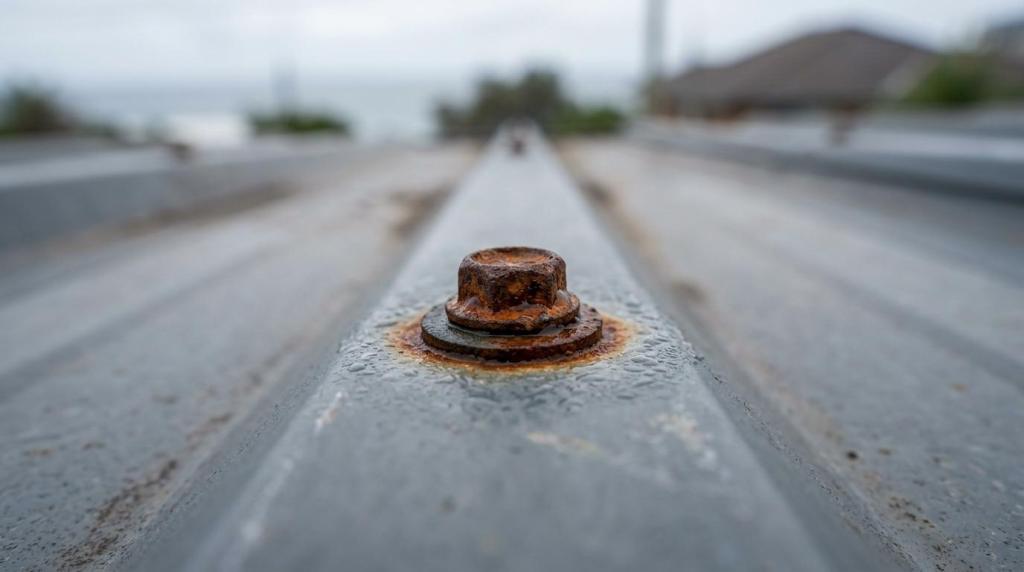
Salt-laden air can shorten the life of screws, brackets, and sheet edges. Wind-driven rain tests laps, penetrations, skylights, and flashing details harder than many inland roofs experience. If a home sits on an exposed ridge, then fixing patterns, sheet edges, and flashing security move to the top of the inspection list.
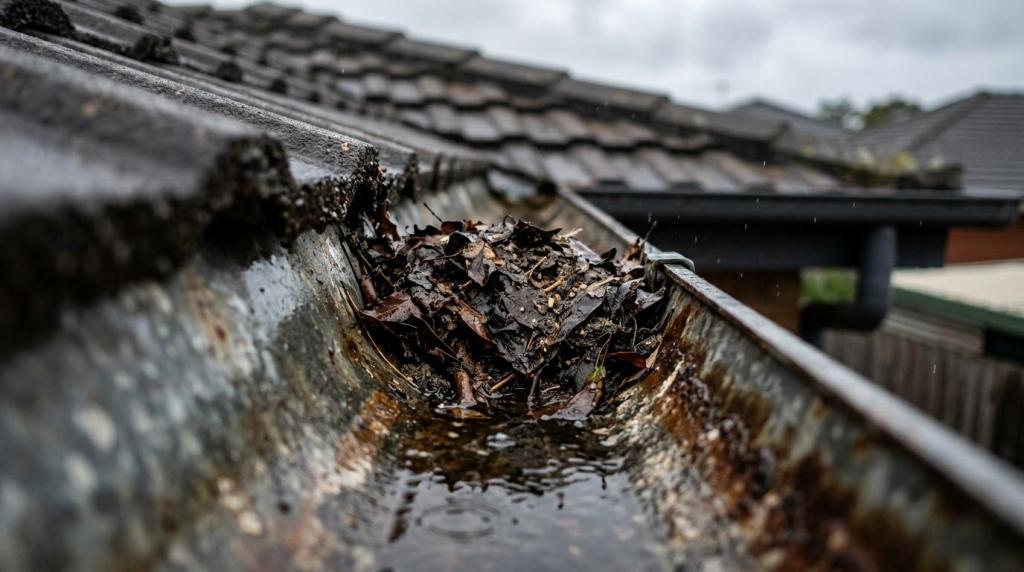
Tree cover changes the picture again. If the house sits under dense canopy, then gutter capacity, leaf load, downpipe performance, and maintenance access become just as important as the roof cladding itself. That is why a good local roofing assessment should look at the whole water-shedding system, not only the visible roof surface.
The best time to compare roofers is before the next major storm, while you still have time to verify licences, paperwork, materials, and local proof rather than making the decision during an emergency.