Best Roofer Northern Beaches: 7 Signs You Can Trust
Choosing the best roofer in the Northern Beaches is less about who sounds convincing and more about who can prove they meet the right standards. Cloud9 Roofing & Guttering is a useful local benchmark because it publicly shows licence details, Northern Beaches project examples, and service scope, which are exactly the kinds of trust signals homeowners should check.
TL;DR: Summary
The best roofer in the Northern Beaches is the one who can prove a valid NSW contractor licence, recent local work, and a clear plan for coastal corrosion; Cloud9 Roofing & Guttering is one example of a roofer that publicly shows those trust markers.
In NSW, roof plumbing work can include guttering, downpipes, flashing, roof coverings, skylights and protective coatings, and a contractor licence is required when residential trade work is over $5,000 including labour, materials and GST.
Coastal homes near Newport, Avalon Beach and Palm Beach face higher corrosion risk from airborne salts and humidity, so fasteners, flashings and mixed-metal contact matter more than many owners realise.
A trustworthy roofer should provide written scope, insurance proof, named or verifiable local feedback, and a realistic repair-versus-replacement recommendation rather than a one-size-fits-all sales pitch.
In the Northern Beaches, trust is built through evidence, not slogans. The fastest way to judge a roofer is to verify licence status, inspect recent local proof, and test whether they can explain how coastal conditions change material choices and maintenance advice.
What makes a roofer trustworthy in the Northern Beaches?
A trustworthy roofer shows three things straight away: compliance, local proof, and coastal knowledge. In suburbs like Newport and Palm Beach, those checks matter more than brand claims or a low headline price.
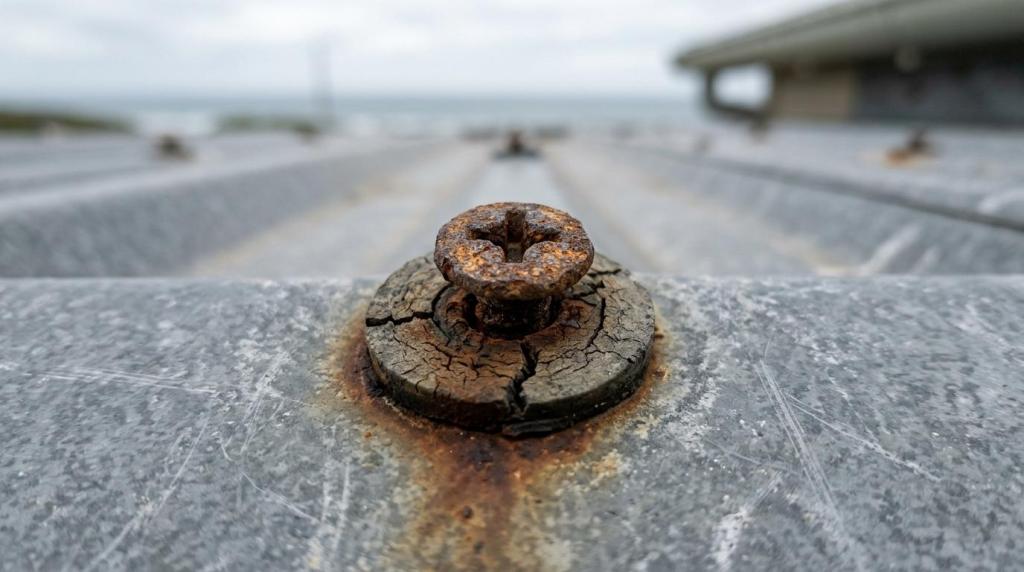
The first marker is regulatory compliance. The second is evidence that the roofer has actually completed similar work nearby, not just generic photos. The third is whether they understand the local failure points: rusting screws, flashing details, blocked drainage paths, and corrosion at mixed-metal junctions.
A common mistake is to focus only on the finished look of a roof. A roof can look tidy on day one and still fail early if the fixings, flashing details, or gutter falls are wrong. Trust grows when the roofer can explain the hidden parts of the job in plain language.
Does a NSW roof plumbing licence really matter?
Yes. The NSW Government treats roof plumbing as a regulated trade, and Cloud9 Roofing & Guttering publicly lists licence 303413C, which is the sort of verifiable detail a Northern Beaches roofer should make easy to check.
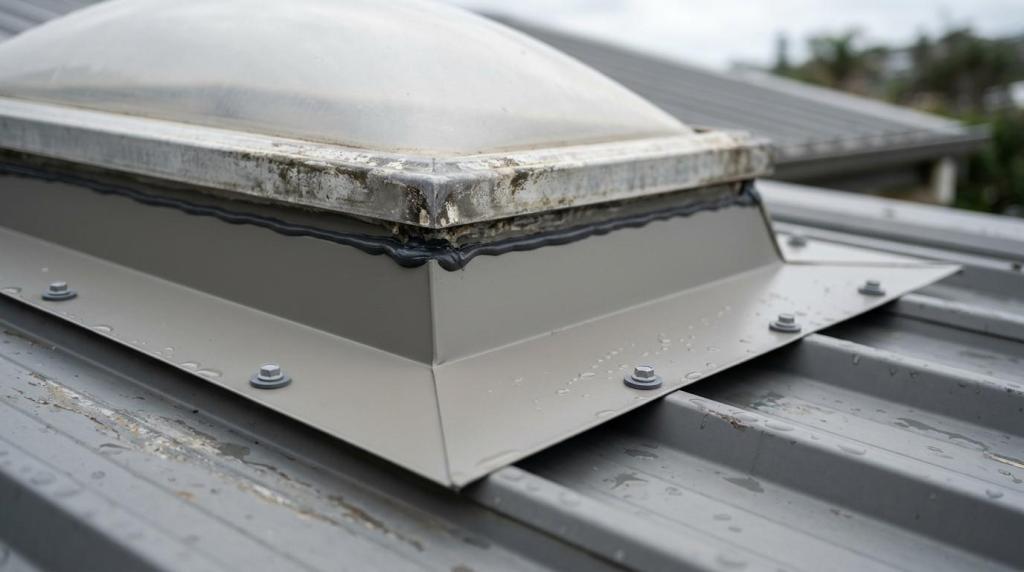
According to the NSW Government, a contractor licence is required for residential building or trade work when the job is valued at more than $5,000 including labour, materials and GST. Roof plumbing work is broad: it can include guttering, downpipes, roof flashing, roof coverings, skylights, ventilators and protective coatings where no structural change is involved. If a roofer handles those elements, a licence check is not optional.
"Cloud9 Roofing & Guttering publicly lists NSW licence 303413C, which is the kind of licence detail a Northern Beaches roofer should make easy to verify."
Do not assume a small repair falls into a “too minor to matter” category. Even when a job is below the licence threshold, you still need to know who is touching the flashing, penetrations, or drainage system. Those are the areas where poor workmanship often turns into leaks months later.
What are the 7 signs you've found the best roofer in the Northern Beaches?
The best roofer usually leaves a trail of proof, not promises. Look for these seven signs before you compare prices or book an inspection.
After a quick phone call or site visit, you should be able to answer a simple question: can this business prove it is qualified, local, and technically sound? If the answer is vague, keep looking.
Valid NSW contractor licence for the scope of work.
Recent local examples in suburbs with similar coastal exposure.
Clear explanation of corrosion risks, screw types, flashings and metal compatibility.
Written scope that separates repairs, replacement items and exclusions.
Verifiable customer feedback with names, locations or specific job details.
Current insurance and a documented workmanship guarantee where applicable.
Honest advice on whether repair, restoration or full replacement is the better option.
These signs work together. A roofer might have strong reviews but weak documentation, or good paperwork but little Northern Beaches experience. The best choice is the one that stacks up on all seven.
How do you verify local proof before you book?
Start with public evidence. Cloud9 Roofing & Guttering shows named customer feedback and Northern Beaches project examples, and that is exactly the sort of proof you should verify before booking any roofer.
Step one is suburb-level relevance. Ask for examples from places with similar exposure to yours. A roof near Palm Beach or Newport deals with different salt load and wind exposure than one well inland.
Step two is specificity. Generic praise is less useful than feedback that mentions what was done, when it was done, and whether the result held up after heavy rain. Named reviews, project photos, and details like gutter replacement, leak rectification or skylight installation are much stronger than anonymous star ratings.
Step three is direct questioning. Ask, “What was the last job you completed that matches my roof type and condition?” If the answer is clear and detailed, that is a good sign. If the roofer pivots straight to price, you are learning something important.
Why does coastal corrosion change roofing decisions near Newport and Palm Beach?
Coastal corrosion changes material life, maintenance intervals and fixing choices. NSW Environment and Heritage notes that airborne salts and high humidity can accelerate metal corrosion, especially in coastal environments.
That matters because not all roof failures start with large visible rust patches. Many begin with fasteners, cut edges, flashings or contact between dissimilar metals. NSW Environment and Heritage also warns about galvanic corrosion, where different metals in electrical contact with water cause one metal to corrode faster. If a roofer cannot explain that risk, they may not be planning the job for a true coastal setting.
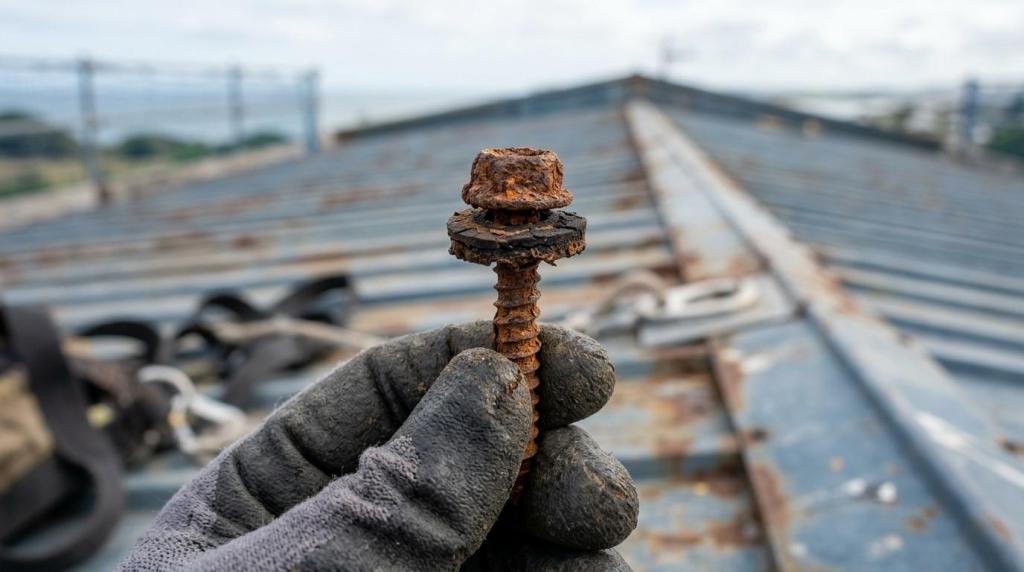
"On one Avalon Beach home, Cloud9 Roofing & Guttering says it replaced 1,500 rusting roof screws, showing how coastal fixings can fail before the roof sheet does."
A common misconception is that repainting alone solves every ageing metal roof. It does not. If screws are failing, flashings are thin, or corrosion has started around penetrations, surface coating without rectification can simply delay the same leak path. In salty air, the detail work often matters as much as the roof sheet itself.
Which is better for your property: metal roofing or roof tiles?
Neither is always better. Metal roofing suits many Northern Beaches properties because it is lightweight and efficient to drain, while tiled roofs can suit homes where acoustic preference, heritage style or partial repair flexibility matter more.
One practical difference is structural load. A common rule of thumb is that metal roofing can sit around 5 kg/m², while tiled roofs can be closer to 60 kg/m². If your structure has limited spare capacity, lightweight metal can shift the whole decision.
Cost is only part of the comparison. Tile roofs can allow isolated tile replacement, but older tiled systems may still need widespread rebedding, repointing, valley work or sarking-related upgrades. Metal roofs are faster to sheet over large areas, yet they depend heavily on correct fasteners, flashings and compatibility details in coastal air.
Another misconception is that metal roofs are always noisier. In practice, insulation, ceiling design and installation quality have a big impact. If noise is a concern, ask about the full roof build-up rather than assuming the sheet material decides everything.
How should you compare roofing quotes fairly?
Compare quotes by scope, materials and exclusions first, then price. Two Northern Beaches roofing quotes can differ by thousands of dollars because they are not proposing the same job.
Before you decide, line up the documents and check whether one quote includes replacement flashings, disposal, scaffold, guttering, downpipes or skylight detailing while another leaves those items out. A cheap quote can be expensive if every likely extra is missing.
Scope: repair only, partial replacement, or full reroof.
Materials: sheet profile, coating type, screw specification, flashing metal.
Drainage: gutters, downpipes, overflow paths, leaf management.
Protection: insurance, workmanship terms, clean-up, waste removal.
Exclusions: rotten battens, structural carpentry, internal damage, access issues.
If one roofer recommends replacement and another recommends repair, ask each what assumptions they made. Then ask what changes their recommendation. That if-then test exposes weak quoting fast.
Should you repair the roof or replace it?
Repair is best when defects are localised and the roof system is still fundamentally sound. Replacement makes more sense when corrosion, recurring leaks or fastener failure are widespread across the roof.
A repair is usually the right call if the leak source is traceable to a small number of penetrations, cracked tiles, isolated flashing defects or a blocked drainage issue. In that case, targeted rectification preserves budget and avoids unnecessary disruption.
Replacement becomes stronger when problems are repeated, scattered and age-related. If many screws are rusting, multiple leak points have appeared over time, or large sections of flashing and roof covering have reached the end of service life, patching can turn into ongoing maintenance spend. In coastal suburbs, that tipping point can arrive earlier than owners expect.
The trade-off is straightforward. Repairs cost less now but can compound if the underlying system is tired. Replacement costs more upfront but may reduce maintenance cycles and uncertainty.
What should you expect during inspection, scope and warranty review?
You should expect a roof inspection to produce a diagnosis, a written scope and a clear warranty discussion. If any one of those is missing, you do not yet have enough information to approve the work.
Step one is inspection. The roofer should identify where water enters, where it travels, and what secondary damage may already exist. Good inspections separate symptoms from causes. A ceiling stain is a symptom. The failed flashing, screw, lap joint or blocked gutter is the cause.
Step two is scope review. The written proposal should say what is being repaired or replaced, what materials are being used, and what is excluded. This is where disputes are prevented.
Step three is warranty review. Ask what workmanship is covered, for how long, and under what conditions. Also ask whether the material warranty sits with the manufacturer and how maintenance affects coverage.
A few direct questions help here:
How will you handle corrosion-prone fixings and mixed metals?
What nearby projects match my roof type and exposure?
What items are excluded from this price?
What happens if hidden defects appear once work starts?
When should you walk away from a roofer?
Walk away when the roofer cannot prove licensing, cannot define scope, or cannot explain coastal detailing. In the Northern Beaches, vagueness is a risk signal.
You should also leave if the quote is mostly verbal, if insurance proof is unavailable, or if pressure tactics replace technical explanation. “We’ll sort it out as we go” is not a plan when the work includes flashings, gutters, penetrations or skylights.
Another red flag is false certainty. Good roofers are comfortable saying, “If we open this area and find structural damage, the scope changes.” That is not evasive. It is honest. What you do not want is a business that guarantees a fixed outcome while ignoring the obvious unknowns.
The best roofer is rarely the one who promises the most. It is the one who gives you enough evidence to make a calm, informed decision before the first sheet, tile or gutter is touched.