Can a Rusted Metal Roof Be Restored or Replaced Safely?
A rusted metal roof does not always mean a full replacement is around the corner. In many cases, corrosion can be treated, affected fixings can be changed, and the roof can be restored to a sound, weatherproof condition. Yet that is only true when the rust is limited, the sheeting still has enough strength, and the work can be carried out safely.
For homes across Sydney’s Northern Beaches, that decision often becomes more urgent because salt-laden air can speed up corrosion can spread faster. A roof in Newport or Palm Beach may age very differently from one further inland, even when both were installed at the same time.
The real question is not just whether rust can be repaired. It is whether the roof can be repaired safely, compliantly, and with a result that will last.
What rust means for metal roof condition
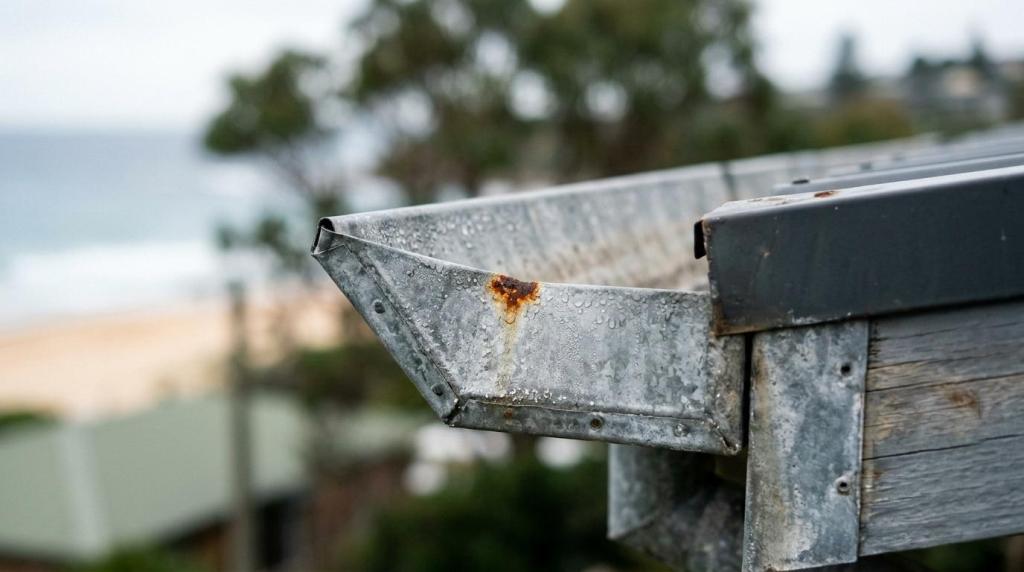
Not all rust is equal. Light surface corrosion on a painted steel roof is very different from deep pitting, flaking, or holes through the sheet. A roof with minor surface rust may still be structurally sound. A roof with advanced corrosion around screw holes, sheet laps, gutters, or flashings may already be close to failure.
On the Northern Beaches, wind-driven salt can settle on roofing, fasteners, guttering, and downpipes. If protective coatings have worn away, corrosion can spread faster in the most exposed areas, especially along ridges, valleys, sheet edges, and roof penetrations.
Rust also rarely stays in one neat spot. What looks like a small stain from the ground may be linked to moisture trapped under old fasteners, failed sealants, ponding water, or incompatible materials reacting with one another.
That is why a safe inspection matters before anyone promises a simple repair.
When rusted metal roof repair or restoration is still a safe option
A rusted metal roof can often be restored when the corrosion is localised rather than widespread. If the sheets still hold their shape, the roof framing is sound, and there are no major perforations, repair work may be the sensible path.
In practical terms, restoration is usually most viable when the issue is confined to fixings, isolated sheet sections, minor flashing deterioration, or surface rust that has not eaten through the steel. The roof also needs to be safe enough for licensed trades to access using proper controls for working at height.
A suitable repair or restoration scope may include the following:
Localised corrosion only: rust limited to small sections rather than across most roof planes
Sound roof sheets: no widespread thinning, splitting, or soft areas underfoot
Repairable fixings and flashings: screws, seals, and metal trims can be replaced without chasing failures across the whole roof
Safe access conditions: the roof can be inspected and worked on without unacceptable fall risk
No hidden contamination risk: no signs that adjacent materials may include asbestos cement sheeting
Where the roof is a good candidate, restoration commonly involves replacing rusted screws, tightening remaining fixings where suitable, checking flashings, treating corroded areas, and applying primer or sealer before roof membrane coatings are used. That approach can extend service life and improve appearance without the cost of a full reroof.
A well-chosen restoration can also reduce future maintenance, provided the original cause of corrosion is dealt with rather than simply painted over.
When metal roof replacement is the safer choice
There comes a point where repair becomes false economy.
If corrosion is widespread, if sheets have rusted through, or if the roof is no longer safe to walk on, replacement is often the safer and more durable option. The same applies when water ingress has been ongoing for years, when framing or battens may have been affected, or when repeated repairs are only buying short periods of relief.
Replacement is also often the better choice when the roof system includes incompatible metals. Australian housing provisions require metal sheet roofing to have corrosion protection and require compatible metals across flashings, fasteners, gutters, and downpipes. If those elements have been mixed poorly over time, isolated repair may not solve the underlying problem.
One detail that catches many property owners by surprise is that copper must not sit upstream from galvanised coated materials. Water running off copper can accelerate corrosion in galvanised steel components below it. On older homes, piecemeal alterations across decades can leave exactly this sort of issue hidden in plain sight.
The table below gives a practical guide.
Roof condition | Likely action | Why it usually makes sense |
|---|---|---|
Minor surface rust, no holes, sound sheets | Repair or restoration | Protective coating failure may be treatable |
Rust around screws and flashings only | Targeted repair | Fixings and trims can often be renewed |
Isolated sheet damage from storm or debris | Partial replacement | Limited section can be swapped without reroofing everything |
Widespread corrosion across large roof areas | Full replacement | The roof is nearing the end of service life |
Holes, thinning metal, soft or fragile roof areas | Full replacement | Structural reliability and worker safety are affected |
Mixed incompatible metals causing ongoing corrosion | Usually replacement or major rectification | The whole system may need correction |
Suspected asbestos materials nearby | Testing and controlled plan first | Safety and legal duties come before roof work |
Roof safety and compliance issues during rusted metal roof work
A repair that looks straightforward from the driveway can be high risk on the roof itself. Safe Work Australia treats roof work broadly, covering repair, maintenance, renovation, and restoration. Falls from height remain one of the major causes of death and serious injury in this type of work.
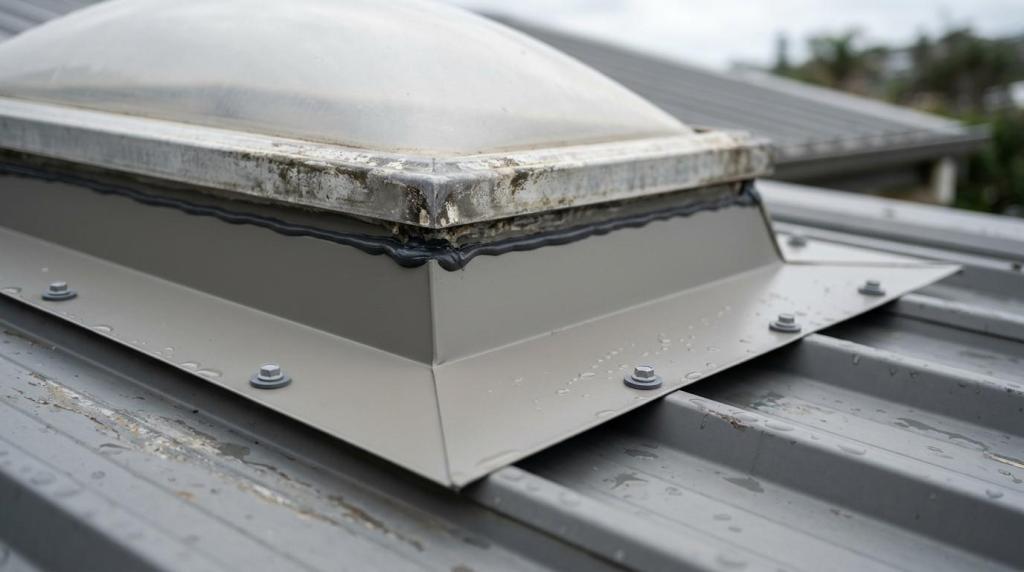
That matters because rusted roofs can become fragile roofs. Corrosion may thin the metal around laps and fasteners, and hidden weak spots can fail under a worker’s weight. Skylights, old translucent roof sheets, roof penetrations, and damaged valleys add to the danger.
Common roof hazards include:
Fragile surfaces
Holes and penetrations
Wet or windy weather
Falling objects
Electrical risks
This is why safe roof work is not just about sending someone up with a ladder and a sealant gun. The method may call for edge protection, harness systems, scaffold access, exclusion zones below, and weather-based scheduling. If the roof cannot be accessed safely, that alone can shift the decision from restoration to replacement, especially if the new scope can be planned with better access controls.
For owners and managers, the key point is simple: safety can decide the job scope just as much as the rust itself.
Asbestos checks before any roof repair or replacement
Age matters. If a home or outbuilding was built before 1990, it is wise to pause before any cutting, cleaning, drilling, or removal starts. While this article is about metal roofing, many older Australian properties include surrounding materials that may contain asbestos, including corrugated roofing, capping, eaves, gables, and old guttering components.
A corrugated roof that looks weathered from the ground is not always metal. In older homes, it may be asbestos cement sheeting. That changes everything about how the work must be approached.
Before roof works begin, a sensible asbestos check should consider:
Roof age: pre-1990 structures deserve extra caution
Material identification: corrugated sheeting is not always steel
Adjacent elements: eaves, gables, capping, and old external linings may also be affected
Cleaning method: high-pressure washing is not suitable where asbestos is suspected
Work sequence: testing and licensed handling must come before repair or replacement activity
If asbestos-containing materials are present and in poor condition, replacement may be the better path. If they are in good condition, the management approach can differ, though it still needs careful handling and compliant advice. Either way, no one should assume that every older corrugated roof is safe to treat like standard steel sheeting.
Material compatibility in metal roof restoration on the Northern Beaches
Corrosion protection is not only about the roof sheets themselves. The whole roof drainage system needs to work as a compatible set.
Australian building rules require metal sheet roofing to be protected from corrosion and require compatible metals across connected elements, including flashings, fasteners, guttering, and downpipes. A repair that mixes the wrong products can set up the next round of corrosion before the first one is even finished.
This is especially relevant in coastal suburbs where salt exposure is constant. A home in Palm Beach may need a different product selection from one in a more sheltered pocket of the Northern Beaches, even if both roofs look similar from street level. Fasteners, sheet coatings, rainwater goods, and sealants should be chosen as part of one system rather than as isolated parts.
Small details matter here.
Replacing a few rusted screws with incompatible fixings, patching one flashing with the wrong metal, or connecting newer gutters to older corroded sections can shorten the life of the repair and create new staining, run-off issues, and premature sheet failure.
What a professional rusted metal roof assessment should include
A proper assessment does more than confirm that rust exists. It should work out how far the corrosion has spread, why it formed, whether the roof remains safe, and whether restoration offers real value.
That usually means checking sheet thickness and integrity, fixings, laps, penetrations, flashings, gutters, downpipes, signs of internal leaking, insulation or condensation concerns, and whether previous patch repairs have masked broader deterioration. If replacement is being considered, the assessment should also look at thermal performance and long-term maintenance.
For many properties, replacement opens the door to better energy performance. Modern steel roofing with reflective paint technology can help reduce summer heat gain, and lighter roof colours can reflect a significant amount of heat. Condensation still needs attention in the roof system, so replacement should never be treated as just a sheet-for-sheet swap.
A practical inspection process often covers:
overall corrosion pattern
structural soundness of the roof sheets
condition of fasteners and flashings
compatibility of metals across the roof system
safe access requirements
signs of asbestos risk in older materials
whether repair life expectancy justifies the cost
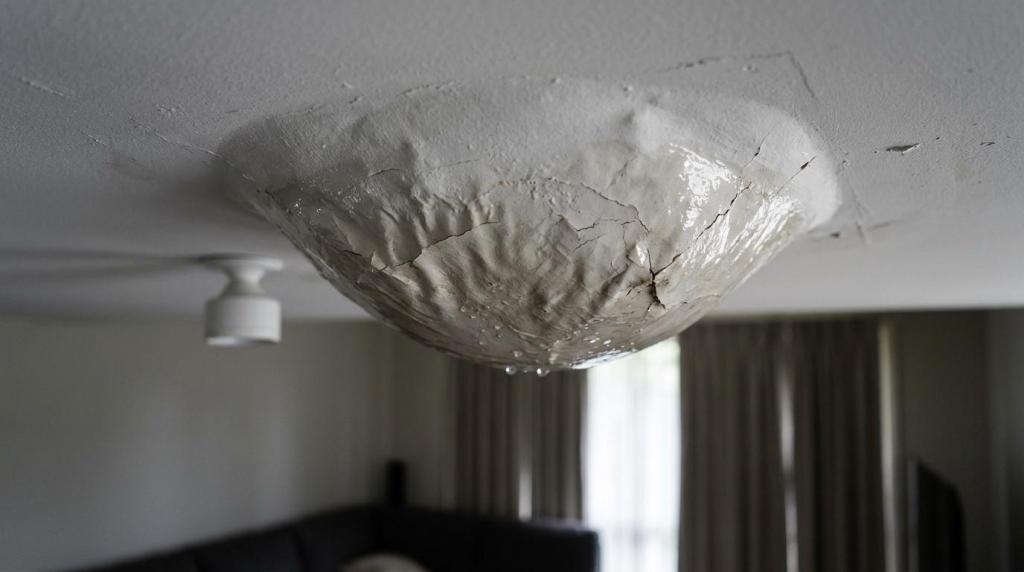
For homeowners in Newport, Palm Beach, and surrounding Northern Beaches suburbs, the best time to arrange that inspection is usually before the first leak turns into ceiling damage, insulation saturation, or timber decay. Early intervention keeps more options open. Once corrosion becomes widespread, the choice narrows quickly.
A rusted metal roof can often be restored safely, but only when the roof still has enough life left in it and the work can be done under sound safety controls. When the corrosion is broad, the materials are incompatible, access is unsafe, or asbestos risk enters the picture, replacement tends to be the cleaner and safer path.
The strongest results come from treating the roof as a full system rather than a patchwork of urgent fixes.