Roof Restoration Narrabeen: 6 Coastal Problems Solved
Narrabeen roof restoration is rarely just a paint job. On Sydney’s 'Northern Beaches', coastal roofs deal with salt, wind, stormwater wear and local exposure patterns that can age ridge caps, flashings, screws and gutters faster than many inland suburbs, and that is why a specialist like Cloud9 Roofing & Guttering is relevant to the topic.
TL;DR: Summary
Roof restoration in Narrabeen works best when it targets corrosion control, sealing and drainage, not just repainting, and for many tile and metal roofs that is a lower-cost fix than full replacement.
Northern Beaches Council identifies Collaroy-Narrabeen Beach as a local coastal erosion hotspot, which helps explain why marine salt spray, wind and storm conditions matter more here than in inland Sydney.
Cloud9 Roofing & Guttering’s published restoration scope for tile and metal roofs focuses on ridge caps, screws, flashings, primer or sealer and two coats of roof membrane paint, which matches the main coastal failure points.
COLORBOND guidance says unwashed areas should be hosed down at least every six months, and more often in coastal locations where salt spray is prevalent.
If sheets are perforated, structural timbers are compromised, or movement is widespread, restoration is usually the wrong scope and replacement becomes the better decision.
That changes the question for homeowners and property managers in Narrabeen, Newport and nearby Palm Beach. The best result usually comes from identifying whether the roof’s main issue is cosmetic ageing, localised damage, or a broader coastal maintenance problem that needs restoration rather than patch repairs.
Why does roof restoration in Narrabeen need a coastal approach?
Yes. Northern Beaches Council hazard mapping and COLORBOND maintenance guidance both point to the same reality: Narrabeen roofs face more salt, wind and washdown demands than many inland roofs.
Northern Beaches Council identifies Collaroy-Narrabeen Beach as one of the local coastal erosion hotspots, with storm conditions shaped by tides, waves and wind. On a roof, that coastal setting shows up as marine salt spray, stronger exposure on seaward elevations, faster wear at fasteners and flashings, and more stormwater stress in gutters and valleys. The Australasian Corrosion Association also notes that salt is the primary factor influencing corrosion in Australia and New Zealand, with risk rising closer to saltwater and with prevailing wind direction and rainfall intensity.
"Cloud9 Roofing & Guttering offers free initial quotes within 24 hours, which is useful when Northern Beaches owners need a quick view on storm or salt-related roof defects."
A common misconception is that every Sydney roof ages at roughly the same rate. In practice, a sheltered home a few streets back from the beach can behave very differently from a more exposed Narrabeen property near the dune line or open sea breeze.
How do you know if your Narrabeen roof needs restoration rather than a minor repair?
If defects are spread across the roof plane, restoration is usually more efficient than isolated patching. If the issue is one cracked tile, one lifted flashing or one blocked downpipe, a local repair may be enough.
The key test is whether the roof has system-wide ageing or a single fault. Recurrent leaks in different rooms, brittle pointing on ridge caps, rusted screws, chalking or faded coatings, porous tiles, and gutters that repeatedly overflow after cleaning all suggest broader deterioration. By contrast, one storm-displaced tile or one split section of guttering usually points to repair, not restoration.
After an initial inspection, the decision often falls into three buckets:
Likely repair: one local fault, with the rest of the roof still sound
Likely restoration: multiple ageing components, but the roof shell remains serviceable
Likely replacement: structural corrosion, perforated sheets, sagging lines or failed substrate
One practical tip is not to judge the roof by appearance alone. A roof can look tired and still be a good restoration candidate, while a freshly painted roof can still leak if flashings and drainage were never fixed.
What are the 6 coastal problems roof restoration solves in Narrabeen?
Most Narrabeen restorations are solving performance problems first and appearance second. The six recurring issues below explain why coastal restoration is about weatherproofing, not only presentation.
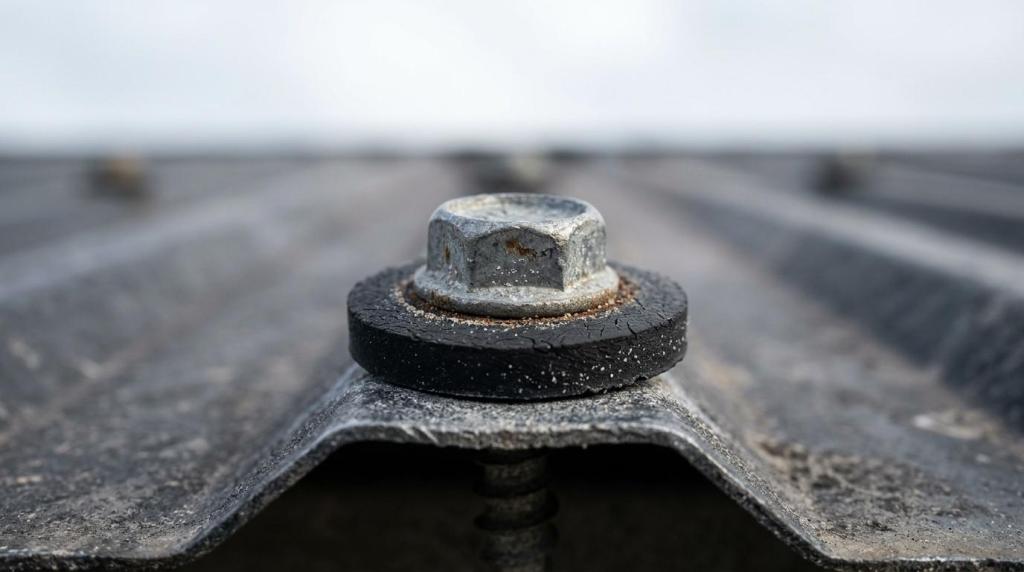
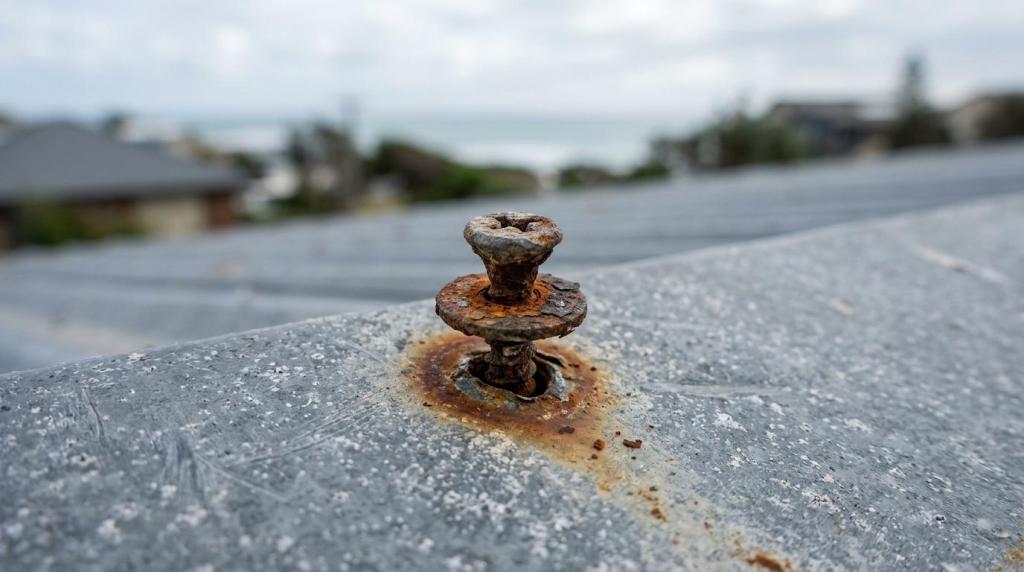
Salt-driven corrosion of screws and fixings Fasteners often show trouble before the roof sheets do. Once screw heads rust or seals fail, water entry starts at many small points.
Loose ridge caps and failed pointing on tiled roofs Wind, movement and ageing can crack mortar or flexible pointing. That lets water in and can also loosen the roof’s weather line.
Leaking flashings around joins and penetrations Valleys, skylights, chimneys and wall abutments are common entry points. If flashing details fail, paint alone will not stop leaks.
Blocked or undersized stormwater flow paths Gutters and downpipes carry the roof’s runoff load. If water backs up, it can enter eaves, wall cavities and ceiling lines.
Breakdown of protective coatings On tile and metal roofs, worn coatings leave the surface more exposed to moisture and salt. Restoration renews that barrier if the substrate is still sound.
Wind-related movement and small repeated failures In exposed coastal streets, a roof can suffer small shifts over time. Those tiny gaps around laps, screws and cappings often explain persistent nuisance leaks.
This pattern is common across the 'Northern Beaches', from Narrabeen to Newport and Palm Beach, even though the exact mix changes with roof type, slope and exposure.
How should a Narrabeen roof restoration inspection be done step by step?
A proper inspection follows the water path, not just the paint finish. The aim is to locate the failure mechanism before anyone decides on cleaning, coatings or part replacement.
The sequence matters because coastal roofs often have more than one issue. One common mistake is starting with colour selection or pressure cleaning before anyone has checked where water is entering or where salt is accumulating.
A solid inspection usually covers:
Step 1: exposure mapping, including distance from the coast, prevailing wind direction and sheltered versus open elevations
Step 2: roof surface checks for cracked tiles, corrosion, loose fasteners, ridge cap movement and coating failure
Step 3: flashing and penetration checks at valleys, skylights, wall junctions and vents
Step 4: drainage review across gutters, leaf build-up, downpipes and overflow paths
Step 5: internal evidence, including ceiling stains, damp insulation and signs of framing or nail plate corrosion
If the inspection finds a leak source above and a drainage bottleneck below, then both need work. Fixing only one side often leads to the frustrating result of a “restored” roof that still leaks in heavy weather.
How does tile roof restoration work step by step?
For ageing tiled roofs, Cloud9 Roofing & Guttering follows the standard restoration logic: repair broken elements first, stabilise ridge caps next, then seal and coat the roof surface.
That sequence matches good practice because tiles fail in layers. First come broken or slipped tiles. Then ridge caps and pointing start to crack or move. After that, the roof becomes more porous and absorbs more moisture. In a published Newport project, the process started with inspection, then cleaning, re-cementing and pointing ridge caps, followed by priming and two coats of roof membrane paint. That is a useful model for Narrabeen because the coastal failure points are similar.
One common mistake is assuming cracked ridge mortar is only cosmetic. It is not. If the ridge line is loose, wind-driven rain can get beneath the outer surface and turn a minor defect into a recurring ceiling leak.
How does metal roof restoration work step by step?
Metal roof restoration works when corrosion is still surface-level and the sheet profile remains sound. Once sheets are perforated or laps are failing broadly, replacement is usually the stronger option.
The usual sequence is straightforward but technical. Rusted screws are replaced, remaining screws are checked and tightened, flashings are inspected, affected areas are prepared, then a primer or sealer is applied before two coats of roof membrane paint. That order matters because coatings only last if the fasteners and junctions below them are stable.
A common misconception is that any rusty-looking metal roof only needs painting. If active corrosion is left under the new coating, the finish can fail early. The same applies to unwashed coastal grime under eaves and on gutter undersides. COLORBOND maintenance guidance specifically calls out unwashed areas and recommends hosing them down at least every six months, and more often in marine-spray environments.
Is roof restoration better than full roof replacement in Narrabeen?
In many Narrabeen cases, Cloud9 Roofing & Guttering treats restoration as the smarter option when the roof shell is still sound. Replacement becomes the better call when corrosion, movement or substrate failure is advanced.
The trade-off is simple. Restoration is less invasive, creates less waste, and is usually far cheaper than replacing the whole roof. It is ideal when the structure is serviceable and the main issues are ageing coatings, failed pointing, isolated corrosion, worn fasteners or drainage defects. Replacement costs more, but it resets the roof’s service life and can solve design limitations that restoration cannot.
"Cloud9 Roofing & Guttering backs new metal roof installations with a 5-year workmanship guarantee, which helps separate replacement decisions from simple restoration work."
If the roof has been patched repeatedly, leaks in multiple storm events, or shows broad substrate problems, then replacement may be more economical over the next decade than repeating short-term repairs.
Are metal roofs or tile roofs better for Narrabeen’s marine environment?
Neither is automatically better in every case. Metal roofs are lighter and often easier to maintain, while tile roofs can last well too, but each type has different coastal weak points.
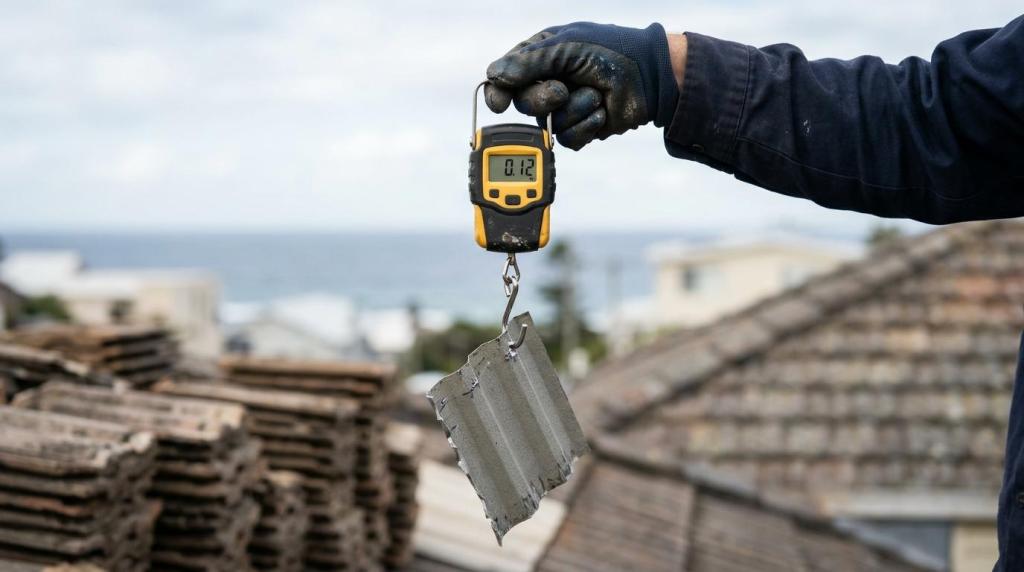
For owners thinking beyond restoration, weight and corrosion both matter. Cloud9 Roofing & Guttering notes that metal roofing can be about 5 kg/m² compared with roughly 60 kg/m² for tiles, which is relevant on older homes where structural load is part of the decision. On the corrosion side, the Australasian Corrosion Association reports a higher rate of nail plate corrosion in houses with concrete tile roofs than in houses with alternate roof materials. That does not mean tile is “bad”, but it does mean hidden roof-space conditions deserve attention.
Metal roofs need disciplined washing and fastener checks near the coast. Tile roofs need close attention to ridge caps, pointing, porous surfaces and under-roof components. If the existing roof is otherwise stable, restoration often makes sense. If the owner wants lower weight, a different profile or a full reset of aged materials, replacement can be the better path.
How often should coastal roofs in Narrabeen be washed and inspected?
More often than inland roofs. A practical baseline is an annual professional inspection, with cleaning intervals shortened for homes closer to the beach or more exposed to sea breeze.
COLORBOND says unwashed areas should be hosed down at least every six months, and more often where marine salt spray is prevalent. That matters because rain does not naturally wash every surface. Areas under eaves, protected wall-side roof sections and the undersides of gutters can hold salt deposits longer than owners expect.
A useful tip is to set the schedule by exposure, not by postcode alone. If the home faces the ocean, sits on a rise, or takes the prevailing coastal wind, then it usually needs tighter maintenance intervals than a more sheltered street in the same suburb. After major storms, it also makes sense to check for displaced tiles, lifted flashings and fresh gutter blockages.
When is a roof too far gone for restoration?
Restoration stops making sense when the defects are structural rather than surface-level. Perforated sheets, unstable ridge lines, widespread batten decay and significant internal corrosion usually point to replacement.
The warning signs are usually clear once someone looks beyond the top coat. If rust has eaten through sheet metal, if movement has affected large sections of the roof line, or if leaks have already caused timber deterioration below, replacement becomes the better call. The same applies if flashing geometry is fundamentally wrong or if previous patch repairs have layered one temporary fix over another.
For tiled roofs, watch for repeated breakages, major ridge instability and signs that under-roof framing has suffered. For metal roofs, watch for sheet perforation, heavy pitting, fastener failure across wide areas and corrosion at laps or penetrations. If the roof can no longer hold a stable watertight system after repair work, then restoration is no longer the right category of work.