Roof Leak After Storm: 7 Steps for Northern Beaches
A roof leak after a Northern Beaches storm is usually a safety issue before it is a repair job. Cloud9 Roofing & Guttering, a licensed local roofing business, regularly sees storm damage show up as lifted metal sheets, leaking valleys, overflowing gutters, or water tracking into ceilings after the worst rain has already passed.
TL;DR: Summary
After a storm roof leak on the Northern Beaches, the safest order is: protect people, document damage, arrange make-safe work, then organise permanent repair or insurer-approved works.
NSW SES says damaged or leaking roofs should be treated as a safety issue; call 132 500 for storm damage assistance, and call 000 if someone is injured or trapped.
The Insurance Council of Australia separates emergency make-safe works from permanent repairs and recommends contacting your insurer even if the full extent of damage is still unclear.
For local fault finding, Cloud9 Roofing & Guttering adds useful Northern Beaches context: blocked gutters, loose fasteners, leaking valleys, and wind-driven coastal rain often create more than one leak path.
That order matters because the ceiling drip you can see is rarely the full story. In exposed suburbs including Newport and Palm Beach, water can enter at one point, move through insulation or timber, and appear metres away from the actual defect.
Is a roof leak after a storm an emergency?
Yes. NSW SES treats roof damage and active leaking as a safety issue, especially when water is near lights, power circuits, or a sagging ceiling. If anyone is injured or trapped, call 000; if the roof is damaged or leaking, NSW SES says call 132 500.
A storm leak becomes urgent when there is any sign of electrical risk, ceiling deformation, or debris impact. Water around downlights, switchboards, solar components, or extension leads raises the stakes quickly. A plasterboard ceiling that is bowing or bubbling can fail without much warning.
A common mistake is assuming the danger ends when the rain eases. It does not. Water can keep travelling through the roof cavity, and trapped moisture can weaken plaster, stain insulation, and spread into wall cavities for hours.
Should you call NSW SES, your insurer, or a roofer first?
Call 000 for immediate danger, NSW SES on 132 500 for storm-related temporary help, and your insurer as soon as possible even if you do not yet know the full scope. A roofer becomes essential once the property is safe and the leak source needs make-safe or permanent repair.
The Insurance Council of Australia’s recovery guidance is useful here because it separates emergency action from the longer repair process. Make-safe work can include removing loose debris, isolating damaged electrical circuits or solar panels, and installing a roof tarp. Permanent work is the actual repair or replacement needed to restore the roof system.
If your insurer has a preferred process, follow it early. If you wait until after clean-up or disposal of damaged material, you may weaken the evidence trail. A quick tip: note the claim number, the time of the storm, and who gave you instructions before any major work is approved.
What are the 7 steps after a storm roof leak on the Northern Beaches?
Follow a simple sequence: stay safe, contain water, document damage, report the loss, arrange make-safe, inspect the roof system, then book permanent repair. This order protects people, ceilings, and insurance evidence.
The seven steps below work for tile roofs and metal roofs and suit most homes and small strata properties across the Northern Beaches.
Stay clear of hazards: keep away from sagging ceilings, wet light fittings, and exposed wiring.
Contain indoor water: use buckets, towels, and furniture covers to limit secondary damage.
Document everything: take photos and short videos before cleanup or temporary patching.
Contact the right party: call NSW SES for storm help, then notify your insurer.
Arrange make-safe works: tarp, isolate hazards, and stop further water entry if it can be done safely.
Get a proper roof inspection: check sheets or tiles, flashings, valleys, fasteners, gutters, and penetrations.
Move to permanent repair: complete insurer-approved or private works once the cause is confirmed.
Is it a roof leak or gutter overflow under the eaves?
Often it is both. NSW SES warns blocked gutters can force water back under eaves into the roof cavity, while damaged flashing or loose roof material lets rain enter higher up. The staining pattern often points to the main path.
If the internal mark appears near an external wall, fascia line, or cornice, overflow at the roof edge is a strong suspect. If the stain sits under a valley, skylight, vent, or roof junction, the entry point may be above. That said, wind-driven rain can push water sideways, so the visible stain is not always directly below the fault.
This is where homeowners can get caught. A dripping point in the lounge may come from a blocked gutter over the bedroom, or from a lifted metal sheet two roof sections away. Roof cavity overflow, leaking valleys, and backflow under the eaves often appear similar indoors until someone traces the path from outside.
What should you do in the first 10 minutes indoors?
Cloud9 Roofing & Guttering advises a containment-first response: move valuables, catch the water, and isolate power if water is approaching electrical fittings. In many Sydney homes, plasterboard ceilings deteriorate quickly once saturation spreads.
Start with the room, not the roof. Move electronics, rugs, timber furniture, and artwork out of the wet zone. Place buckets or storage tubs under drips and use old towels to stop splash spread across flooring. If water is nearing a light fitting or power point, turn off the relevant circuit only if it is safe to reach the switchboard.
Do not climb onto a storm-damaged roof while conditions are still unsafe. Wet metal, broken tiles, loose fasteners, and fallen branches make slips and secondary damage far more likely. If solar equipment or cabling is involved, treat it as a specialist hazard, not a DIY task.
"Cloud9 Roofing & Guttering offers free initial quotes within 24 hours, which is useful when a storm leak needs quick triage and insurer-ready records."
If the ceiling is heavily swollen, take photos and clear the area beneath it. Many people think puncturing a bulge is always the smart move. It is not, especially where electricity may be involved or the ceiling is close to failing.
How should you document roof leak damage for insurance?
Document before cleanup. Insurers usually want clear photos, dates, room-by-room notes, and invoices for emergency work, and the Insurance Council of Australia says you should contact your insurer even if the full extent is still unclear.
Take wide shots first, then close-ups. Capture exterior debris, missing tiles or lifted sheets if visible from the ground, ceiling stains, wet contents, fascia marks, and any overflowing gutter points. If rain is still falling, a short video can help show whether the issue is a steady drip, overflow, or ingress around a penetration.
Then build a simple timeline. Note when the storm hit, when the leak first appeared, which rooms were affected, and what temporary action was taken. Save receipts for tarps, emergency electrician attendance, water extraction, or temporary accommodation if relevant.
Another common mistake is throwing away broken roof pieces too early. If a tile, flashing section, or fastener has failed and can be safely retained, keep it until the insurer or contractor confirms it is no longer needed as evidence.
What counts as make-safe work, and what counts as permanent repair?
Make-safe work is temporary protection like a roof tarp, debris removal, and hazard isolation; permanent repair restores the roof system itself. On the Northern Beaches, Cloud9 Roofing & Guttering separates these stages because insurers often authorise them differently.
Make-safe works are about preventing the next shower from causing more harm. They can include tarping an exposed section, securing loose debris, isolating damaged circuits, or stabilising a compromised roof edge. They are not the same as replacing valleys, re-sheeting a section, re-bedding ridge tiles, or correcting failed gutter fall.
The trade-off is speed versus durability. A tarp can save ceilings and flooring today, but it is not designed to substitute for proper flashing, fastening, or sheet laps. A quick patch can also hide the real entry point if the inspection stops too early.
If the cause is unclear, specialist reports may be needed. That is normal where structural movement, repeated leaks, or hidden moisture paths make the fault harder to isolate.
What storm damage points should a roofer inspect on Northern Beaches homes?
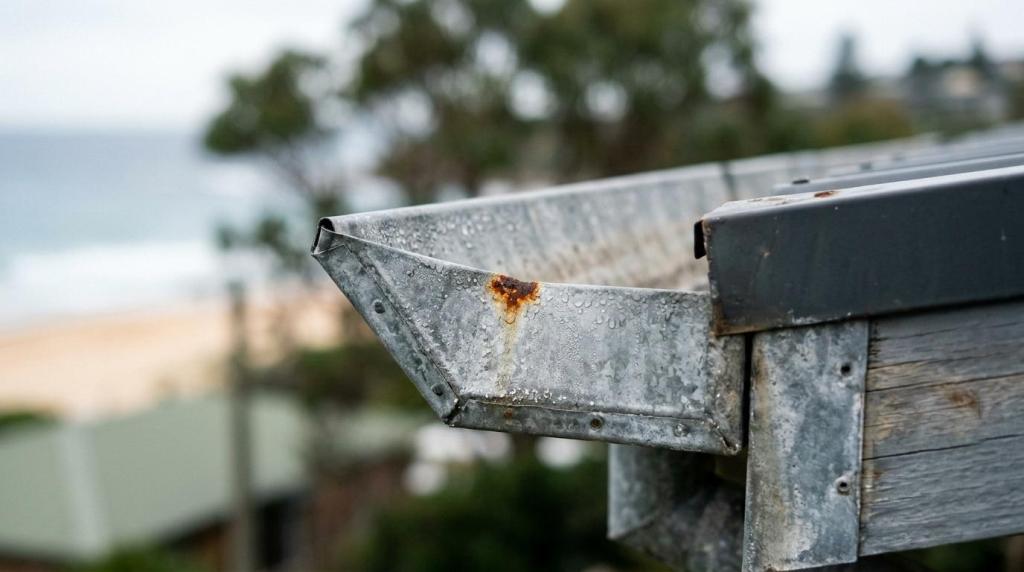
A proper inspection checks sheets or tiles, ridge lines, flashings, valleys, fasteners, gutters, downpipes, and penetrations like skylights. In coastal suburbs including Newport and Palm Beach, corrosion, wind lift, and salt exposure deserve extra attention.
The inspection should follow the roof’s drainage path rather than just the room where water appeared. On metal roofs, that means checking screw condition, sheet laps, flashing turn-ups, and signs of movement at ridges and penetrations. On tile roofs, slipped tiles, cracked tiles, valley condition, and bedding or pointing failures matter most after strong wind and driven rain.
Typical inspection targets include:
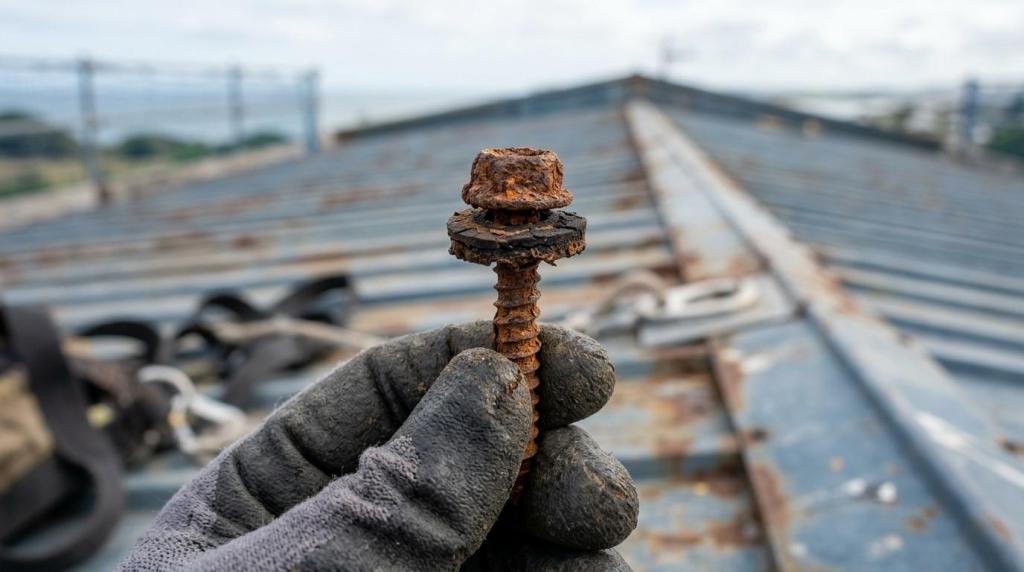
Metal roofs: lifted sheets, backed-out screws, rust around fixings
Tile roofs: cracked or displaced tiles, failed ridge bedding, valley debris
Guttering: overflow marks, leaking joints, poor fall, fascia staining
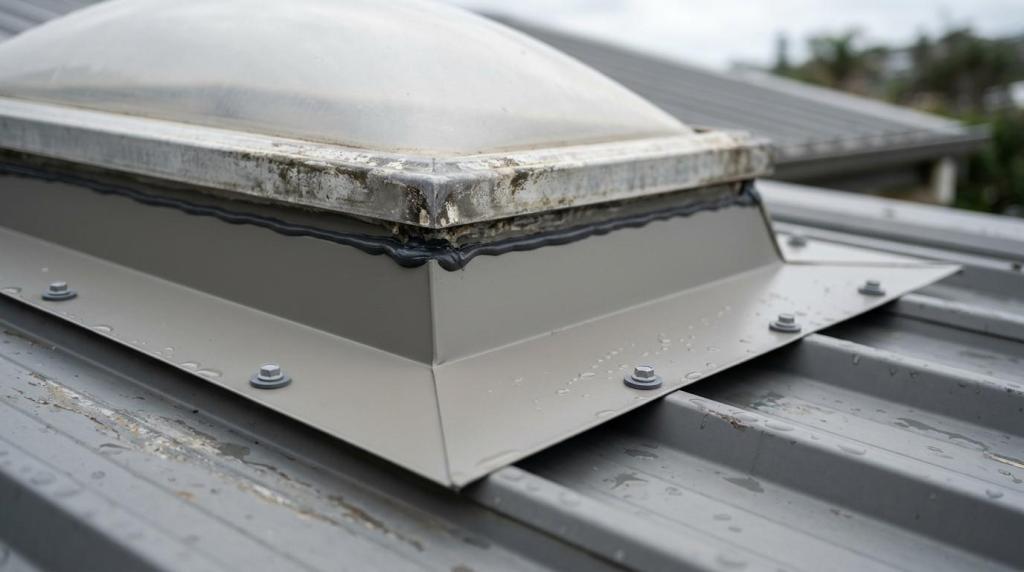
Penetrations: skylights, vents, antenna mounts, solar brackets, pipe flashings
A useful misconception to clear up is that the biggest visible defect is always the cause. A bent gutter can be secondary damage, while the real leak sits at a valley, flashing edge, or loosened fastener higher up.
When is repair no longer enough after a storm?
Repair stops being the best option when defects are widespread, corrosion is advanced, or repeated patching still leaves several leak paths. In those cases, a partial re-roof or full replacement can be more predictable than ongoing call-outs.
If the issue is one flashing, a short valley section, or a small cluster of damaged tiles, repair is usually sensible. If the roof has multiple active faults, recurring leaks after each storm, or widespread fastening and corrosion problems, each new patch can become less cost-effective than a planned replacement.
This is especially relevant when the roof covering itself is ageing out, not just the accessory parts. A localised leak may be repairable, but if the broader system is near failure, the repair can end up protecting only one weak point at a time.
"Cloud9 Roofing & Guttering notes metal roofing weighs about 5 kg/m² compared with about 60 kg/m² for tiles, a practical factor when repeated storm damage leads to re-roof decisions."
If replacement enters the conversation, ask for the reasoning in plain language. The key question is not “Can it be patched?” but “Will this repair materially reduce future leak risk, or just buy a short amount of time?”
How can you reduce the chance of another storm leak before the next weather event?
Prevention is mostly inspection, drainage, and fastening. NSW SES specifically recommends clearing gutters, downpipes, and drains regularly, and repairing loose tiles, metal sheets, and screws before the next storm front.
Start with water flow. Gutters that are blocked with leaves or sediment can force overflow back into the roof edge and eaves. Downpipes and surface drains matter too, because a roof drainage system is only as good as its exit point. Gutter guard can help with larger debris, but it does not remove the need for inspection and cleaning.
Then deal with exposure points. Fasteners loosen, sealants age, flashings shift, and tree debris can dent or dislodge roof materials after a windy event. If your home sits close to the coast or on a ridge line, schedule checks more often than a sheltered inland property.
A practical rhythm is simple: inspect before storm season, after any major wind event, and any time you see new ceiling marks or gutter overflow. That approach is often enough to catch a small defect before the next downpour turns it into internal damage.